China's Long March 10 Rocket Makes Debut, Manned Lunar Mission Enters Countdown

Jul 23, 2025 By

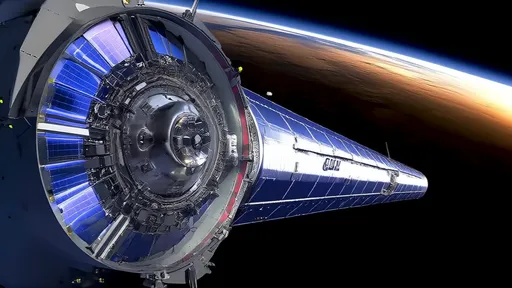
The world's space exploration landscape is shifting dramatically as China prepares to take its most ambitious leap yet. With the recent unveiling of its next-generation Long March 10 rocket, the Asian giant has signaled that its decades-long dream of putting astronauts on the lunar surface is finally entering the home stretch. This technological marvel represents more than just another rocket - it embodies China's determined push to become a true space superpower.


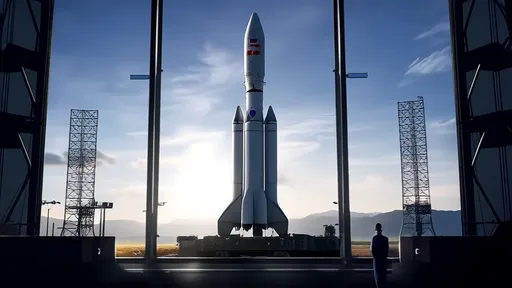
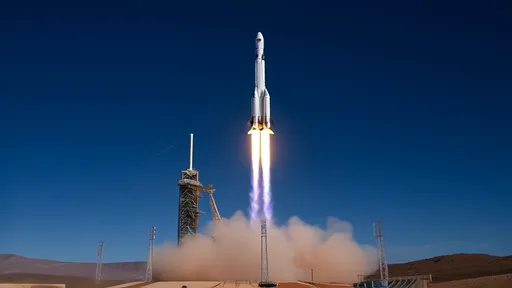
China's lunar ambitions have been gradually crystallizing over the past two decades, but the Long March 10's development marks a qualitative shift in both capability and intent. Standing nearly 300 feet tall with a liftoff thrust exceeding 2,600 tons, this three-stage behemoth is specifically designed to handle the extreme demands of crewed lunar missions. Its appearance at recent aerospace exhibitions wasn't just for show; industry insiders confirm the rocket has already entered intensive testing phases.


What makes the Long March 10 particularly noteworthy is its dual configuration system. The standard version will be used for low Earth orbit operations and assembling China's new space station. But the more powerful lunar variant, featuring three additional boosters, will provide the necessary muscle to propel astronauts toward Earth's celestial neighbor. This modular approach demonstrates sophisticated engineering pragmatism - building flexibility into what will become China's workhorse heavy-lift vehicle.


The rocket's payload capacity tells the story of its lunar intentions. With the ability to hurl 27 tons directly to trans-lunar injection trajectories, it surpasses the lift capabilities of anything currently in China's arsenal. This puts it in the same class as NASA's legendary Saturn IB rocket from the Apollo era, though with modern materials, propulsion systems, and digital controls that make direct comparisons somewhat misleading.


Chinese space officials have been unusually transparent about their timelines, suggesting the first uncrewed test flight could occur as early as 2027. If successful, this would pave the way for a crewed lunar orbital mission around 2029, setting the stage for an actual landing attempt in the early 2030s. This accelerated schedule has caught many Western analysts by surprise, forcing reassessments of China's technological maturation rate.


Behind the rocket's development lies an equally impressive crewed spacecraft system. The new-generation spacecraft, which successfully completed an unmanned test in 2020, is being refined to handle lunar missions. With a modular design featuring a reentry capsule and service module, it bears conceptual similarities to NASA's Orion spacecraft but with distinct Chinese innovations in heat shielding and abort systems.


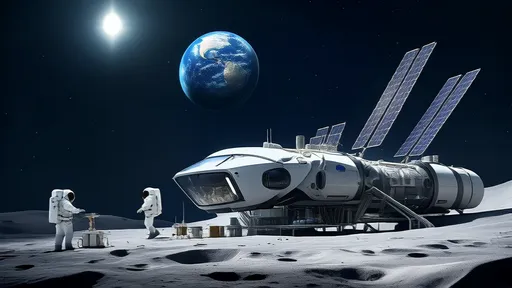
Perhaps most intriguing is China's simultaneous development of a lunar lander. While details remain scarce, leaked design concepts show a two-stage system not dissimilar to the Apollo Lunar Module. The descent stage would handle the landing burn while the ascent stage would return astronauts to lunar orbit for rendezvous with their mothership. This architecture suggests China is following a proven technical path while undoubtedly adding its own improvements.


The geopolitical implications of China's lunar program cannot be overstated. As NASA pushes forward with its Artemis program aiming to return Americans to the Moon by 2026, we're witnessing the early stages of what could become a new space race. Unlike the Cold War competition between the U.S. and Soviet Union, however, this 21st century version features more players and different rules of engagement.


China's methodical, step-by-step approach to space exploration stands in contrast to the more public-private partnership model favored by the United States. While SpaceX and other American companies innovate through rapid prototyping and occasional spectacular failures, China's state-run program emphasizes reliability through exhaustive testing. Both approaches have merits, but they're creating fundamentally different development cultures.


Technological hurdles remain before Chinese astronauts can plant their flag in the lunar regolith. Mastering complex orbital rendezvous techniques, developing reliable life support systems for extended missions, and creating lunar surface suits all present significant challenges. Yet China has consistently demonstrated an ability to tackle such problems systematically, as evidenced by its successful construction of the Tiangong space station.


The Long March 10's propulsion system deserves special attention. Using a mix of kerosene/oxygen engines for its core stages and hydrogen/oxygen engines for upper stages, it represents an optimization of different propulsion technologies for different flight regimes. This careful balancing of performance factors shows how far Chinese rocket science has progressed since the days of reverse-engineered Soviet designs.


International reaction to China's lunar ambitions has been mixed. Some see it as a welcome expansion of humanity's presence in space, while others view it through the lens of strategic competition. The reality likely lies somewhere in between. China has expressed interest in international cooperation for lunar exploration, but its close military-civil fusion approach to space technology gives many potential partners pause.


What's undeniable is that China's space program has achieved remarkable consistency in meeting its stated goals. From its first satellite in 1970 to its first astronaut in 2003, from lunar orbiters to Mars rovers, Beijing has methodically checked off milestones while avoiding the dramatic failures that sometimes accompany ambitious space programs. This track record suggests their lunar aspirations shouldn't be taken lightly.


The road ahead will test China's aerospace industry like never before. Developing the Long March 10 is just one piece of an enormously complex puzzle that includes training astronauts for lunar operations, creating surface habitats, and establishing reliable communication networks across cislunar space. Each of these represents a monumental technical challenge requiring sustained investment and political will.


As the Long March 10 moves from design boards to launch pads, it carries with it the aspirations of a nation that sees space exploration as both a practical endeavor and a symbolic demonstration of technological prowess. Whether this will lead to sustainable lunar exploration or become another chapter in competitive nationalism remains to be seen. What's certain is that humanity's return to the Moon is looking increasingly like a multiparty endeavor, with China now positioned as a lead actor rather than a spectator.


The countdown to China's lunar ambitions has well and truly begun. With the Long March 10 taking center stage in this cosmic drama, the next decade promises to rewrite the narrative of human space exploration in ways we're only beginning to comprehend. As rockets go, it may not be the largest or most powerful ever built, but its historical significance could ultimately eclipse its technical specifications.



Recommend Posts
Tech

Google's Quantum Supremacy Challenged: New Algorithm Enables Traditional Computers to Surpass

By /Jul 23, 2025

The race for quantum supremacy has taken an unexpected turn as new algorithmic breakthroughs threaten to upend Google's hard-won advantage. For years, the tech giant's quantum processors appeared unstoppable, solving calculations deemed impossible for classical computers. Now, a seismic shift is occurring in research labs worldwide as mathematicians and computer scientists fight back with ingenious classical algorithms.
Tech

Quantum Encryption Technology Commercialization, Banks and Governments as Pioneer Users

By /Jul 23, 2025

The commercialization of quantum encryption technology has reached a pivotal milestone, with banks and government agencies emerging as its first major adopters. This cutting-edge security solution, long confined to research labs and theoretical discussions, is now being deployed to safeguard some of the world’s most sensitive data. Financial institutions and public sector entities are leading the charge, recognizing the urgent need to future-proof their communications against the looming threat of quantum computing attacks.
Tech

Toyota Adjusts Hydrogen Vehicle Strategy: Doubling Sales Target by 2030

By /Jul 23, 2025

Toyota has made a bold strategic pivot in its hydrogen fuel cell vehicle (FCV) ambitions, announcing plans to double its global sales target for fuel cell vehicles to 200,000 units annually by 2030. This aggressive revision signals the automaker’s deepening commitment to hydrogen technology as a cornerstone of its multi-pathway approach to carbon neutrality, even as competitors increasingly focus on battery electric vehicles (BEVs).
Tech

Blue Origin's New Rocket Makes Its First Flight, Bezos: Ticket Price Drops to $500,000

By /Jul 23, 2025

Jeff Bezos' space venture Blue Origin has marked a significant milestone with the successful maiden flight of its next-generation rocket, simultaneously announcing a substantial reduction in ticket prices for future space tourism flights. The groundbreaking development positions the company as a more accessible player in the burgeoning commercial space industry.
Tech

D-Wave Announces Commercialization of Hybrid Quantum Computers, First Customers Revealed

By /Jul 23, 2025

The quantum computing landscape has taken a significant leap forward as D-Wave Systems, a pioneer in the field, officially announced the commercialization of its hybrid quantum computers. This milestone marks a pivotal moment in the industry, bringing quantum capabilities closer to real-world applications. The company also unveiled its first set of customers, showcasing a diverse range of industries eager to harness the power of quantum computing.
Tech

China's Long March 10 Rocket Makes Debut, Manned Lunar Mission Enters Countdown

By /Jul 23, 2025

The world's space exploration landscape is shifting dramatically as China prepares to take its most ambitious leap yet. With the recent unveiling of its next-generation Long March 10 rocket, the Asian giant has signaled that its decades-long dream of putting astronauts on the lunar surface is finally entering the home stretch. This technological marvel represents more than just another rocket - it embodies China's determined push to become a true space superpower.
Tech

EU Launches Space Internet" Initiative to Challenge Starlink Dominance

By /Jul 23, 2025

The European Union has officially unveiled its ambitious plan to develop a satellite-based internet network, marking a significant step in its bid to challenge the dominance of SpaceX's Starlink. Dubbed the "European Space Internet Initiative," the project aims to provide high-speed, low-latency broadband coverage across the continent and beyond, with a particular focus on bridging the digital divide in rural and remote areas. This move signals the EU's determination to assert its technological sovereignty and reduce reliance on foreign satellite internet providers.
Tech

Apple iOS 18 to Introduce Stealth Mode" to Completely Block Ad Tracking

By /Jul 23, 2025

Apple is set to revolutionize user privacy once again with the upcoming iOS 18 update, which will introduce a groundbreaking "Stealth Mode" designed to completely block ad tracking. This move marks another bold step in the company’s ongoing commitment to safeguarding user data, further distancing itself from the data-hungry practices that dominate much of the digital advertising industry. The announcement has already sent ripples through the tech world, with advertisers and privacy advocates alike bracing for the impact.
Tech

The Largest Data Breach in History: 3 Billion User Records Listed for Sale on the Dark Web

By /Jul 23, 2025

In what cybersecurity experts are calling the most catastrophic data breach ever recorded, a staggering 3 billion user records have surfaced on the dark web, available for purchase by the highest bidder. The leaked information, compiled from multiple undisclosed sources, includes email addresses, passwords, phone numbers, and in some cases, even financial details. This unprecedented exposure of personal data has sent shockwaves through governments, corporations, and privacy advocates worldwide.
Tech

Waymo Autonomous Taxis Enter New York, Challenging Traditional Taxi Industry

By /Jul 23, 2025

New York City’s streets, long dominated by the iconic yellow cabs, are witnessing a seismic shift as Waymo’s self-driving taxis make their debut. The arrival of autonomous vehicles in one of the world’s most congested urban landscapes marks a pivotal moment for the taxi industry, raising questions about competition, safety, and the future of human drivers. Waymo, a subsidiary of Alphabet Inc., has steadily expanded its footprint across the U.S., but its entry into New York represents its most audacious move yet—a direct challenge to the entrenched taxi culture of the city.
Tech

BYD Solid-State Battery Breakthrough: Mass Production Achieved with 1,200 km Range

By /Jul 23, 2025

The electric vehicle (EV) industry has reached a pivotal moment as BYD, China's leading automaker, announces the successful mass production of its next-generation solid-state batteries. This technological leap promises to deliver an unprecedented driving range of over 1,200 kilometers on a single charge, effectively eliminating range anxiety that has long plagued EV adoption.
Tech

Neuralink's First Human Test Subject Recovers, Can Control Computers with Thoughts

By /Jul 23, 2025

The world of neurotechnology has taken a monumental leap forward with the recent news of Neuralink's first human trial subject successfully controlling a computer using only their thoughts. This groundbreaking development marks a pivotal moment in the quest to merge human cognition with artificial intelligence, opening doors to possibilities that were once confined to the realm of science fiction.
Tech

AI Cancer Diagnosis Accuracy Exceeds 98%, Potentially Replacing Radiologists

By /Jul 23, 2025

The rapid advancement of artificial intelligence (AI) in healthcare has reached a pivotal milestone, with recent studies demonstrating that AI systems can diagnose cancer with an accuracy exceeding 98%. This breakthrough has sparked intense debate within the medical community, raising questions about the future role of radiologists and the potential for AI to revolutionize cancer detection.
Tech

Gene-Edited Babies Experiment Restart? Scientists Call for Global Regulation

By /Jul 23, 2025

The controversial prospect of gene-edited babies has resurfaced in scientific discourse, reigniting ethical debates and prompting renewed calls for international oversight. Nearly five years after Chinese scientist He Jiankui shocked the world by creating the first CRISPR-edited infants, researchers warn that similar experiments may be underway in regulatory gray zones across the globe.
Tech

ChatGPT Faces Major Security Breach: Millions of User Data Compromised

By /Jul 23, 2025

In a shocking turn of events, OpenAI's widely popular AI chatbot, ChatGPT, has fallen victim to a sophisticated cyberattack. Hackers successfully infiltrated the system, making off with sensitive data belonging to millions of users. The breach, which occurred earlier this week, has sent ripples across the tech industry, raising serious concerns about the security of AI-powered platforms and the privacy of user information.
Tech

EU Passes AI Act, Violating Companies Face Up to 6% of Global Revenue in Fines

By /Jul 23, 2025

The European Union has taken a monumental step in regulating artificial intelligence with the passage of its landmark AI Act, setting a global precedent for oversight in the rapidly evolving tech landscape. Among its most striking provisions is the imposition of hefty fines on companies found in violation of the law—penalties that could reach up to 6% of a firm’s global revenue. This move underscores the EU’s commitment to reining in the potential risks of AI while fostering innovation, but it has also sparked intense debate about its implications for businesses and technological advancement.
Tech

Tesla's Full Self-Driving V12 Rollout: Musk Declares Era of True Autonomy Has Arrived

By /Jul 23, 2025

The automotive and tech worlds are buzzing with Tesla's latest milestone—the full rollout of its Full Self-Driving (FSD) Version 12 software. Elon Musk, the company's CEO, has boldly proclaimed that this update marks the arrival of "true autonomous driving." Unlike previous iterations, which relied heavily on pre-programmed rules and human intervention, FSD V12 leverages end-to-end neural networks, fundamentally changing how Tesla vehicles perceive and navigate the world.
Tech

NIO's Battery Swap" Model Lands in Europe, Can 5-Minute Full Charge Disrupt Charging Stations?

By /Jul 23, 2025

NIO's battery swap technology has officially landed in Europe, marking a significant milestone in the electric vehicle (EV) industry. The Chinese automaker's innovative approach promises to deliver a fully charged battery in just five minutes, a stark contrast to the lengthy charging times associated with traditional charging stations. As NIO expands its footprint in Europe, the question on everyone's mind is whether this "battery swap model" has the potential to disrupt the dominance of charging infrastructure.
Tech

NASA's Ambitious Lunar Base Plan Unveiled: Permanent Habitat Targeted Before 2030

By /Jul 23, 2025

In a groundbreaking announcement that has reignited global interest in space exploration, NASA has revealed concrete plans to establish a permanent human presence on the Moon within this decade. The agency's detailed blueprint outlines the construction of a sustainable lunar base capable of supporting extended astronaut missions, with the ambitious target of making it operational before 2030. This bold initiative marks a significant leap forward in humanity's quest to become an interplanetary species.
Tech

SpaceX Achieves Historic Starship Landing, Paving the Way for Martian Future

By /Jul 23, 2025

The aerospace community erupted in cheers as SpaceX's massive Starship prototype successfully touched down for the first time after a high-altitude test flight. This landmark achievement marks what Elon Musk calls "the critical step toward making life multiplanetary." The stainless steel behemoth, standing nearly 400 feet tall when stacked with its Super Heavy booster, represents humanity's most promising vehicle for interplanetary travel.