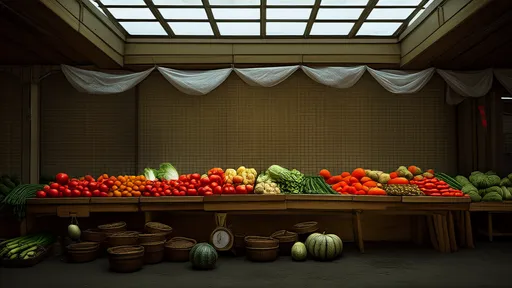
In the labyrinthine alleys of wet markets across Asia, a vibrant sociology of food unfolds daily. These bustling hubs reveal more than just commerce—they're living archives of regional culinary DNA, where the scent of turmeric mingles with the earthy perfume of freshly dug yams, and fishmongers' calls compete with the rhythmic thud of cleavers on wooden blocks. The unassuming bitter melon stacked beside purple-stemmed water spinach tells a story of monsoon diets, while the knobbled galangal roots whisper of ancient spice routes.
Morning light filters through bamboo baskets of winged beans as grandmothers pinch-flick through bunches of sawtooth coriander, their practiced fingers decoding freshness like braille. This is where culinary anthropology lives—not in museum displays but in the sweat-dampened shirts of vendors who arrange fermented shrimp paste jars like sacred relics. The market's topography itself becomes a flavor map: the fermented section's funky umami clouds, the dried goods aisle's symphony of rustling banana leaves, the live eels thrashing in enamel basins near the tofu master's stall.
What Western supermarkets sanitize into sterile conformity, these markets celebrate in glorious particularity. That misshapen durian oozing sticky promise isn't flawed produce—it's a seasonal trophy hauled from jungle foothills. The variegated chilies strung like firework garlands aren't mere decor but a chromatic scale of Scoville heat. Vendors become flavor translators, explaining how to bruise lemongrass properly for broths or which banana variety wraps sticky rice best. Their wisdom flows in a patois of agricultural nuance: "This batch of wild betel leaves came after the first spring rain—more fragrant for wrapping grilled eel."
The market's social choreography reveals unspoken rules. Fishwives reserve the silver-skinned mackerel with iridescent bellies for regulars who appreciate their oil-rich flesh. Herb sellers tuck away culantro (not cilantro) for Caribbean grandmothers making sofrito. This is gustatory insider trading—the good stuff never hits the display tables. Watch how the tofu artisan slides a custardy slab of tau fa to the woman who brings her own brass pot, or how the pickle auntie fishes out a special jar of young mango relish when she spots a customer's Isan dialect tattoo.
Seasonality writes its own menu here. The arrival of monsoon mushrooms clinging to bark prompts a run on clay pots for slow braises. When green mangoes turn up sour enough to make jaws clench, entire neighborhoods suddenly crave som tam. These are not trends but deep-time foodways—the same itch for tartness that made Tang dynasty poets rhapsodize about unripe plums now manifests in Thai teenagers buying tamarind pods by the kilo. The market's fermented fish section alone could fuel a PhD dissertation, from the amber pools of Vietnamese mam tom to the crystalline Burmese ngapi bricks that dissolve into broths like savory alchemy.
Modernity nibbles at these traditions. The teenager helping at her mother's stall scrolls TikTok between customers, but still knows to select pea eggplants that burst with bitter creaminess when pressed. A delivery guy in Grab uniform negotiates for black chicken—his app gig funding traditional postpartum soup ingredients. Even as refrigeration changes rhythms (no more dawn trips for still-twitching prawns), the market adapts without surrendering its soul. The century egg vendor now accepts QR payments, but still judges ripeness by holding eggs to his ear like a safecracker.
To understand a culture through its markets is to bypass postcard clichés. That knotted kelp isn't just soup stock—it's a memory of coastal grandmothers teaching grandchildren to tie sailor's knots. The pandan leaves scenting the air carry the ghost of colonial-era cake shops where workers snuck native flavors into European desserts. Every shriveled mandarin peel in the dried goods stall represents winters past, when families peeled oranges by hearths and saved the rinds for future prosperity symbolism.
These markets are time machines where fermented bean curd jars hold the tang of wartime ingenuity, and baskets of foraged fiddleheads testify to mountain survival knowledge. The real "local food movement" didn't start with hipster farmers—it never stopped here. When a Hmong vendor insists you try a purple sticky rice ball steamed in banana leaf, she's offering more than snack—it's edible anthropology, a taste of migration routes preserved in glutinous grains dyed with forest plants. No Michelin guide can decode this; you need calloused hands that know exactly how tight to wrap a zongzi so the bamboo flavor penetrates but doesn't overwhelm.
The next industrial food scandal or superfood craze will barely ripple here. While nutritionists debate antioxidants, the turmeric seller has known for generations that his rhizomes get sautéed in coconut oil for maximum bioavailability. The proof? His great-uncle lived to 102 despite a pack-a-day habit, sworn by turmeric latte before it was Insta-famous. This is slow knowledge—accumulated not in labs but through millennia of watching which wild greens kept laborers strong, which fish bones made the richest broths, which clay pots kept water coolest in summer.
To visit these markets as a foreigner is to become temporarily illiterate. Without the cultural software to parse why certain luffa gourds command premium prices (older vines yield sweeter flesh) or why black sesame gets sold next to ginger (postpartum tradition), one misses the silent dialogues. But linger long enough, and patterns emerge—the way rainy season shifts demand from sun-dried squid to fresh river snails, how lunar phases affect purchases of blood cockles. These aren't shopping habits but circadian rhythms of appetite, tuned to landscapes and histories far deeper than any supermarket aisle.

By /Jul 8, 2025
By /Jul 8, 2025

By /Jul 8, 2025

By /Jul 8, 2025

By /Jul 8, 2025

By /Jul 8, 2025
By /Jul 8, 2025
By /Jul 8, 2025
By /Jul 8, 2025

By /Jul 8, 2025

By /Jul 8, 2025

By /Jul 8, 2025

By /Jul 8, 2025
By /Jul 8, 2025

By /Jul 8, 2025
By /Jul 8, 2025

By /Jul 8, 2025

By /Jul 8, 2025
By /Jul 8, 2025

By /Jul 8, 2025
