The aroma of freshly baked bread is a universal language, transcending borders and cultures. From the crisp crust of a French baguette to the soft, pillowy texture of Central Asian naan, bread tells a story of human ingenuity, tradition, and shared sustenance. This cultural journey explores how bread—simple in its ingredients yet profound in its significance—has shaped civilizations and connected people across time and space.
The Baguette: A Symbol of French Identity
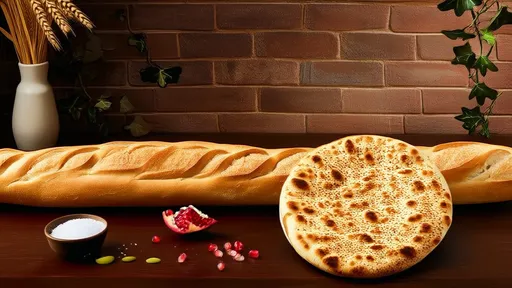
No discussion of bread can begin without paying homage to the French baguette, an icon of culinary artistry. With its golden crust and airy interior, the baguette is more than just a staple—it’s a cultural emblem. Legend has it that Napoleon Bonaparte demanded long, thin loaves for his soldiers, as they could be easily carried in their uniforms. Whether or not the tale is true, the baguette became synonymous with French life, its crackling sound under the knife a morning ritual in households from Paris to Provence.
Yet the baguette’s journey is also one of regulation and reverence. In 1993, France passed the "Décret Pain," a law stipulating that traditional baguettes must contain only flour, water, yeast, and salt—no additives allowed. This commitment to purity reflects a broader cultural obsession with preserving culinary heritage. Today, the best boulangeries compete fiercely for the title of "Meilleure Baguette de Paris," a testament to how deeply bread is woven into the fabric of French identity.
Naan: The Heart of Central Asian Hospitality
Travel eastward, and the narrative of bread takes on new textures. In the clay ovens of Uzbekistan and Afghanistan, naan—a flatbread with ancient roots—emerges blistered and fragrant. Unlike its Indian counterpart cooked in a tandoor, Central Asian naan is often stamped with intricate patterns before baking, turning each loaf into an edible work of art. Here, bread is sacred; it’s never placed upside down (a sign of disrespect) or wasted (crumbs are saved for birds).
The communal act of breaking naan binds people together. At a dastarkhan, the traditional spread of dishes in Central Asia, bread is always the first and last thing eaten. Elders tear pieces with their hands and offer them to guests—a gesture of trust and generosity. This custom echoes along the Silk Road, where caravans once relied on durable flatbreads as sustenance during long journeys. Naan isn’t merely food; it’s a currency of human connection.
Sourdough: The Global Revival of an Ancient Technique
In recent years, sourdough has experienced a renaissance, bridging past and present. Its origins trace back to ancient Egypt, where wild yeast first leavened dough. The method spread through Rome and medieval Europe, with each culture developing distinct variations. San Francisco’s foggy climate, for instance, fostered a particularly tangy strain of lactobacillus, giving birth to the city’s famed sourdough bread.
The COVID-19 pandemic unexpectedly reignited worldwide interest in sourdough baking. As people sought comfort in quarantine, social media overflowed with images of bubbly starters and crusty loaves. This resurgence wasn’t just about nostalgia—it represented a longing for slower, more intentional living. Sourdough’s slow fermentation process, requiring patience and attention, became a metaphor for resilience. Bakers from Seoul to Berlin shared tips online, creating a virtual community bound by flour and water.
Challah: Braided Blessings
In Jewish tradition, challah carries spiritual weight. The braided loaf, often topped with poppy or sesame seeds, graces Shabbat tables as a symbol of divine provision. According to halacha (Jewish law), a portion of dough must be set aside when baking—a practice called "hafrashat challah" that dates back to Temple times. The act transforms mundane cooking into sacred ritual.
Challah’s shape varies with the calendar: round loaves appear during Rosh Hashanah to symbolize the cycle of the year, while ladder-like designs before Yom Kippur represent aspirations for spiritual ascent. Diaspora communities have further enriched challah’s story; Ethiopian Jews incorporate teff flour, while Mizrahi versions might include date syrup. Each variation preserves history while adapting to new environments—much like the Jewish people themselves.
The Future of Bread: Innovation Meets Tradition
As climate change threatens wheat crops and dietary trends shift, bakers worldwide are reimagining bread’s future. In Scandinavia, researchers experiment with seaweed-enriched dough to boost sustainability. Peruvian chefs revive ancient grains like kiwicha, once cultivated by the Incas. Even in France, some boulangers blend heritage wheat with modern techniques to create loaves that are both nutritious and flavorful.
Yet amidst innovation, the essence remains unchanged. Whether torn from a steaming tandoor or sliced in a Brooklyn bakery, bread continues to nourish body and soul. Its journey—from Neolithic flatbreads to artisanal miches—mirrors humanity’s own progress. As we break bread together, we honor this timeless alchemy of flour, water, and fire that has sustained civilizations for millennia.
In every crumb lies a story waiting to be shared. The next time you bite into a crusty slice or dip warm naan into hummus, remember: you’re tasting more than food. You’re savoring history, culture, and the enduring power of human connection—one loaf at a time.

By /Jul 8, 2025
By /Jul 8, 2025

By /Jul 8, 2025

By /Jul 8, 2025

By /Jul 8, 2025

By /Jul 8, 2025
By /Jul 8, 2025
By /Jul 8, 2025
By /Jul 8, 2025
By /Jul 8, 2025

By /Jul 8, 2025

By /Jul 8, 2025

By /Jul 8, 2025
By /Jul 8, 2025

By /Jul 8, 2025
By /Jul 8, 2025

By /Jul 8, 2025

By /Jul 8, 2025
By /Jul 8, 2025
By /Jul 8, 2025
