The rustle of silk, the intricate folds of fabric, and the weight of history settling on one's shoulders - trying on traditional garments offers more than just a photo opportunity. It's an intimate dialogue with cultures that have perfected the art of adornment over centuries. From Kyoto's kimono studios to Delhi's sari emporiums and Shanghai's hanfu ateliers, these sartorial time machines reveal unexpected truths about how clothing shapes identity.
The Kimono: A Moving Meditation
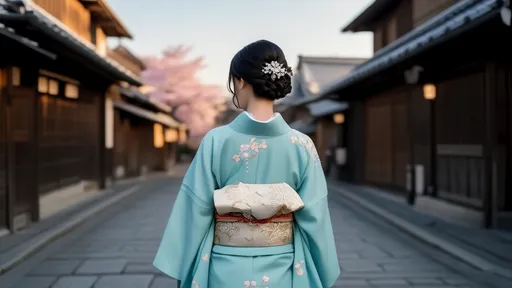
In a tucked-away Kyoto machiya, the ritual begins with selecting the obi. "This isn't dressing," my kimono instructor chides gently as she wraps the midnight-blue sash thrice around my waist, "this is creating architecture for the body." The layers build methodically - juban undergarment first, then the kimono's wide sleeves that force graceful, measured movements. Suddenly, my usual stride feels vulgar; the garment demands the sliding shuffle of geta sandals. The constraint becomes liberation - bound by silk, my posture straightens, gestures grow deliberate. A tourist's playful costume morphs into profound respect for generations of women who wore this as daily armor.
Modern kimono stylists whisper of quiet rebellion. "See how young girls pair traditional motifs with Doc Martens?" one artisan notes while adjusting my collar. The obi knot at my back - a stiff, elaborate butterfly - took her twenty minutes to perfect. "Their grandmothers would faint," she laughs, "but this is how traditions breathe." As twilight gilds the Kamo River, I finally understand the kimono's paradox: its strict geometry somehow contains infinite possibilities for self-expression.
Sari: Six Yards of Sovereignty
Mumbai's humid air clings to my first attempt at draping a sari - the slippery chiffon defeating my Western-honed coordination. "Stop fighting the fabric," advises Mrs. Kapoor, her hands moving with the certainty of sixty monsoons. Under her guidance, the emerald-green material transforms from chaotic yardage into structured elegance. The secret lies in the pleats: twenty-three precise accordion folds pinned at the waist, the remainder tossed over my shoulder with calculated nonchalance. "A sari is democracy," she declares, adjusting my pallu, "the same six yards wrap a fisherwoman and a CEO differently."
The blouse becomes a revelation. Stitched to my exact measurements (no ready-to-wear here), its short sleeves and backless design showcase what Western fashion would obscure. "Indian women understand the power of showing skin strategically," Mrs. Kapoor winks, securing my chunky silver waistchain. Walking through Colaba's markets, the sari's genius reveals itself - the breeze cooling my midriff, the fabric allowing dynamic movement despite its elegance. When a group of college girls compliment my "newbie pleats," I realize the sari isn't merely worn; it's performed, with every woman adding her own verse to an ancient song.
Hanfu: Rewearing History
Shanghai's hanfu revivalists approach their craft with scholarly fervor. "This Ming dynasty ruqun style was reconstructed from tomb murals," explains curator Li Wei, lacing my high-waisted skirt's silk ties. The proportions feel alien - the top barely grazing my ribs, the floor-length skirt adding invisible height. As he drapes the long, cross-collared beizi overgarment, the mirror reflects someone from a Tang dynasty painting. "Western clothes emphasize the body's shape," Li observes, "hanfu creates space between fabric and flesh - it's about suggesting form rather than displaying it."
In Hangzhou's West Lake, hanfu-clad youths pose beneath weeping willows, their wide sleeves catching light like stained glass. Many outfits blend historical accuracy with modern flair - machine-embroidered phoenixes on synthetic fabrics, hidden pockets for smartphones. "Our grandparents associated hanfu with backwardness," admits university student Zhang Yixing, adjusting his futou hat's wings, "but for us, it's about reclaiming aesthetics colonialism tried to erase." The movement's political undertones become tangible when a passerby sneers "time traveler" - Zhang's retort ("better than cultural amnesia") hangs in the air like incense smoke.
The Weight of Threads
Beneath the Instagrammable moments, these garments carry quiet resistance. The kimono's obi presses against the diaphragm like a gentle reminder: slow down. The sari's pallu requires constant adjustment, a tactile meditation on presence. Hanfu's flowing layers reject fast fashion's immediacy - one doesn't simply throw it on. Each fold and knot becomes a covenant with patience in an era of instant gratification.
Perhaps traditional attire's greatest gift is the way it redistributes attention. Western fashion often asks "do I look good?" These garments pose different questions: "Do I move with intention? Do I honor the hands that crafted this?" As I return each piece to its keepers, the lessons linger like fading perfume - that clothing can be ceremony, that beauty lives in constraints, and that sometimes, to find yourself, you must first lose yourself in another culture's closet.

By /Jul 8, 2025
By /Jul 8, 2025

By /Jul 8, 2025

By /Jul 8, 2025

By /Jul 8, 2025

By /Jul 8, 2025

By /Jul 8, 2025
By /Jul 8, 2025

By /Jul 8, 2025
By /Jul 8, 2025

By /Jul 8, 2025

By /Jul 8, 2025

By /Jul 8, 2025
By /Jul 8, 2025

By /Jul 8, 2025
By /Jul 8, 2025

By /Jul 8, 2025

By /Jul 8, 2025
By /Jul 8, 2025
By /Jul 8, 2025
