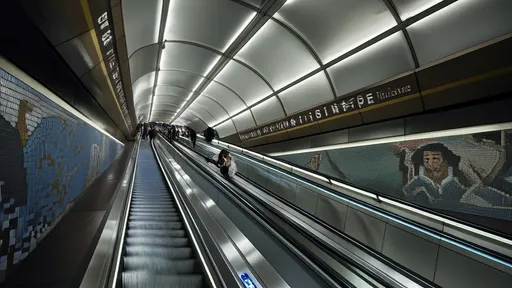
In the heart of bustling metropolises, beneath the chaotic rhythm of city life, lies a hidden world of artistic marvels—subway stations transformed into underground palaces. These subterranean galleries, often overlooked by hurried commuters, are where architecture, history, and creativity converge. From the grand mosaics of Moscow to the futuristic designs of Stockholm, metro systems across the globe have become canvases for cultural expression, turning mundane transit into an aesthetic journey.
The concept of subway art is far from new, but its evolution has been nothing short of extraordinary. What began as functional spaces designed for efficiency has blossomed into a celebration of local identity and global artistry. In cities like London and Paris, where the underground systems are among the oldest, the stations themselves are historical artifacts, adorned with period-specific details that tell the story of their era. Meanwhile, newer networks in Asia and the Middle East have embraced cutting-edge technology and bold artistic statements, creating spaces that feel more like contemporary museums than transit hubs.
Moscow’s Metro: A Soviet-Era Masterpiece
No discussion of subway art would be complete without mentioning Moscow’s metro system, often dubbed the "people’s palaces." Built during the Soviet era, these stations were intended to showcase the power and prestige of the state, and they do so with breathtaking grandeur. Chandeliers drip from vaulted ceilings, marble columns stretch toward intricately painted arches, and mosaics depict scenes of industrial triumph and pastoral idylls. Stations like Komsomolskaya and Mayakovskaya are not just stops along a route—they are monuments to a bygone ideology, frozen in time yet vibrantly alive.
The artistry here is deliberate, every tile and fresco serving as propaganda as much as decoration. Yet, decades later, the political messages have faded into the background, leaving behind sheer visual splendor. Commuters no longer see the hammer and sickle in the same light, but they cannot help but pause, even for a second, to admire the craftsmanship. It’s a reminder that beauty often outlives its original intent.
Stockholm’s Subterranean Art Gallery
If Moscow’s metro is a relic of the past, Stockholm’s is a living, evolving gallery. Over 90 of the city’s 100 stations feature installations ranging from cave-like murals to avant-garde sculptures. The bedrock itself becomes part of the art, with exposed stone walls painted in bold hues or left raw to contrast with modern interventions. T-Centralen, the system’s busiest hub, is awash in calming blue vines, a tribute to the workers who built the network. Meanwhile, Solna Centrum station plunges visitors into a fiery red cavern, a stark commentary on deforestation and environmental decay.
What sets Stockholm apart is its commitment to accessibility—not just in terms of physical space but artistic engagement. There are no velvet ropes or admission fees; the art is simply there, waiting to be discovered by anyone with a metro ticket. It democratizes culture in a way few institutions can, proving that public transport can be a great equalizer.
The Minimalist Elegance of Tokyo
Tokyo’s approach to subway art is a study in restraint. In a city known for sensory overload, its stations offer pockets of tranquility through minimalist design. Clean lines, muted colors, and subtle installations create an atmosphere of order amidst the urban frenzy. Stations like Omotesando and Nogizaka reflect Japan’s Zen philosophy, where less is more, and empty space holds as much meaning as the art itself.
Yet, even here, surprises await. Temporary exhibitions pop up in nondescript corridors, and stations like Roppongi showcase permanent works by renowned artists like Yayoi Kusama. The contrast between the bustling streets above and the serene underground is deliberate, a reminder that beauty can be found in quiet moments—even during rush hour.
New York’s Mosaic of Cultures
New York’s subway is as eclectic as the city itself, a patchwork of styles and influences that mirror its diverse population. From the iconic ceramic plaques at Astor Place to the vibrant murals of Harlem-125th Street, the system feels like a microcosm of the five boroughs. Some pieces, like the glass mosaics at 34th Street-Hudson Yards, are sleek and modern, while others, like the vintage ads preserved at City Hall station, are nostalgic nods to the past.
What makes New York’s underground art unique is its lack of uniformity. There’s no overarching theme or style—just a collection of voices, each telling a different story. It’s messy, unpredictable, and utterly captivating, much like the city above.
As urban spaces grow more congested and digital distractions multiply, subway art offers a rare opportunity to disconnect and immerse oneself in creativity. These underground palaces remind us that even the most utilitarian spaces can inspire, provoke, and delight. Whether you’re a daily commuter or a curious traveler, the next time you descend into the depths, take a moment to look around. You might just find yourself standing in the middle of an unassuming masterpiece.

By /Jul 8, 2025

By /Jul 8, 2025
By /Jul 8, 2025

By /Jul 8, 2025
By /Jul 8, 2025

By /Jul 8, 2025

By /Jul 8, 2025

By /Jul 8, 2025

By /Jul 8, 2025

By /Jul 8, 2025
By /Jul 8, 2025

By /Jul 8, 2025
By /Jul 8, 2025

By /Jul 8, 2025

By /Jul 8, 2025
By /Jul 8, 2025

By /Jul 8, 2025

By /Jul 8, 2025

By /Jul 8, 2025

By /Jul 8, 2025
